

ORIGINAL ARCHITECTURE
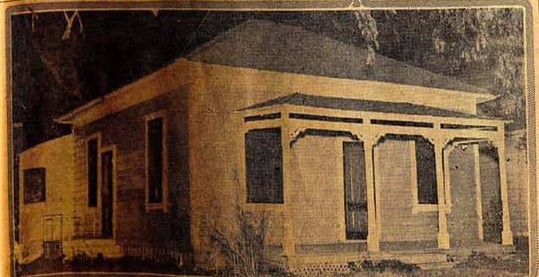
The Harada House on Lemon Street was originally built in the late 1870s to early 1880s, likely around 1884. The house was built as a single-story cottage with a four-room plan. One of seven original homes on the block bounded by Third and Fourth Streets, the house was bordered by orange groves on the back half of the block. Original Victorian Eastlake-style features and hardware, including door hinges, remain on the ground floor.
HARADA FAMILY PURCHASE
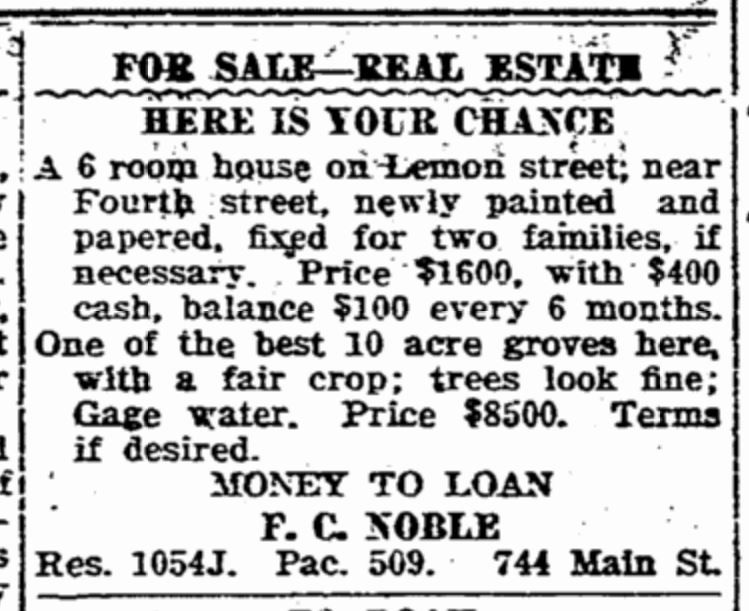
In December of 1915, Jukichi Harada negotiated the purchase of the Lemon Street home. Although the owners, Fulton and Hannah Gunnerson, were originally unwilling to sell the house to a Japanese American family, they eventually agreed to a sales price of $1,500. The family’s new Lemon Street neighbors subsequently offered $1,900 to the Harada family to purchase the house, hoping to keep the Japanese American family from moving into their white neighborhood. Jukichi Harada famously refused to sell, saying “I won’t sell. You can murder me, you can throw me into the sea, and I won’t sell.”
RENOVATIONS
Despite public uproar over the family’s purchase of the house, Jukichi Harada hired the Harp Brothers to renovate the family’s new home. The 1916 renovations expanded the house to approximately 1800 square feet with the addition of a second floor (with four bedrooms, a bathroom, and an open front sleeping porch). Upstairs finishes included oak floors, electric lights and switches, and brass hardware. The renovations also extended the front porch and added the staircase between the first and second floors. Craftsman-style details were added, including box columns and decorative ties on the front porch. Nearly all the historic wallpaper, fixtures, and hardware from this period remain.

WORLD WAR II: FORCED REMOVAL & INCARCERATION
Along with 120,000 other Japanese Americans, the Harada family was forcibly removed and incarcerated in US concentration camps during World War II. One of the iconic features of the Harada House is the pencil inscription written by Harold Shigetaka “Shig” Harada on the plaster wall of his upstairs bedroom, “Evacuated on May 23, 1942 Sat 7 AM Shig.”
JESS STEBLER
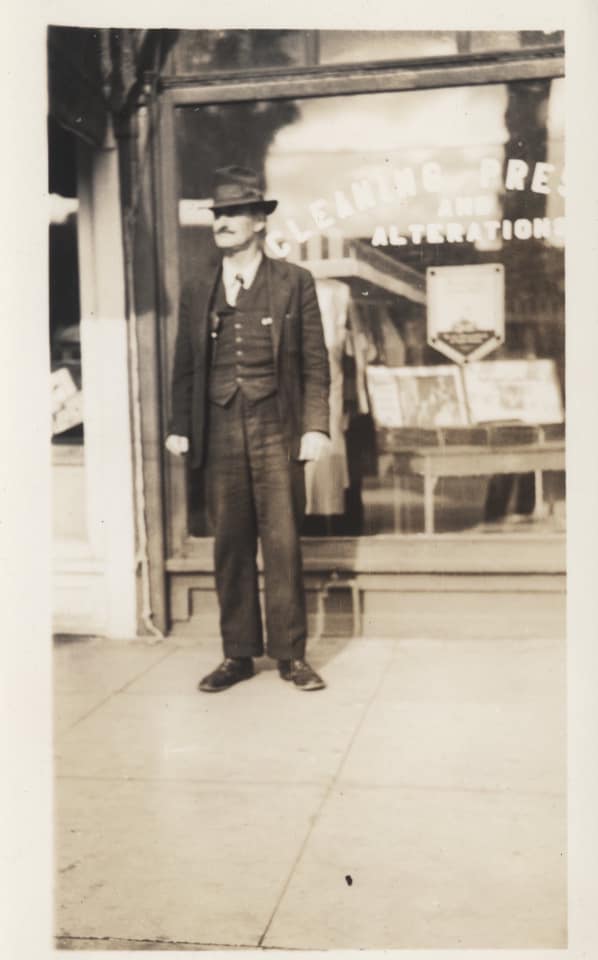
Unlike many Japanese American families, the Harada family was fortunate to retain ownership of their Lemon Street home during WWII thanks to the dedication of Jess Stebler. A close friend of the family and daily customer at their restaurant, Jess Stebler moved into the family home and acted as its caretaker, ensuring bills were paid and the house would remain safe. He regularly wrote Sumi, sent care packages to the concentration camps, and once even drove to visit the Haradas in the concentration camp to deliver fresh donuts. Jess Stebler’s letters describe the house landscaping at the time, including a peach tree, morning glories, roses, and apricots.
SUMI'S RETURN
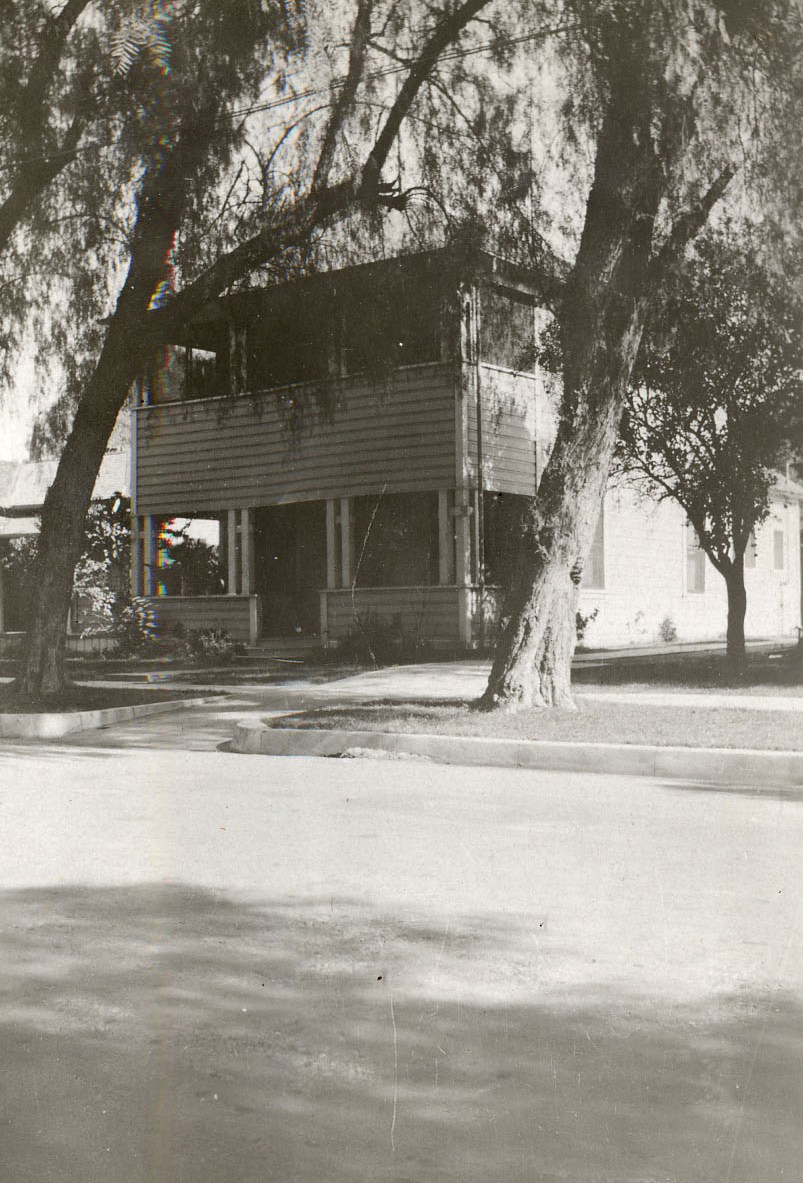
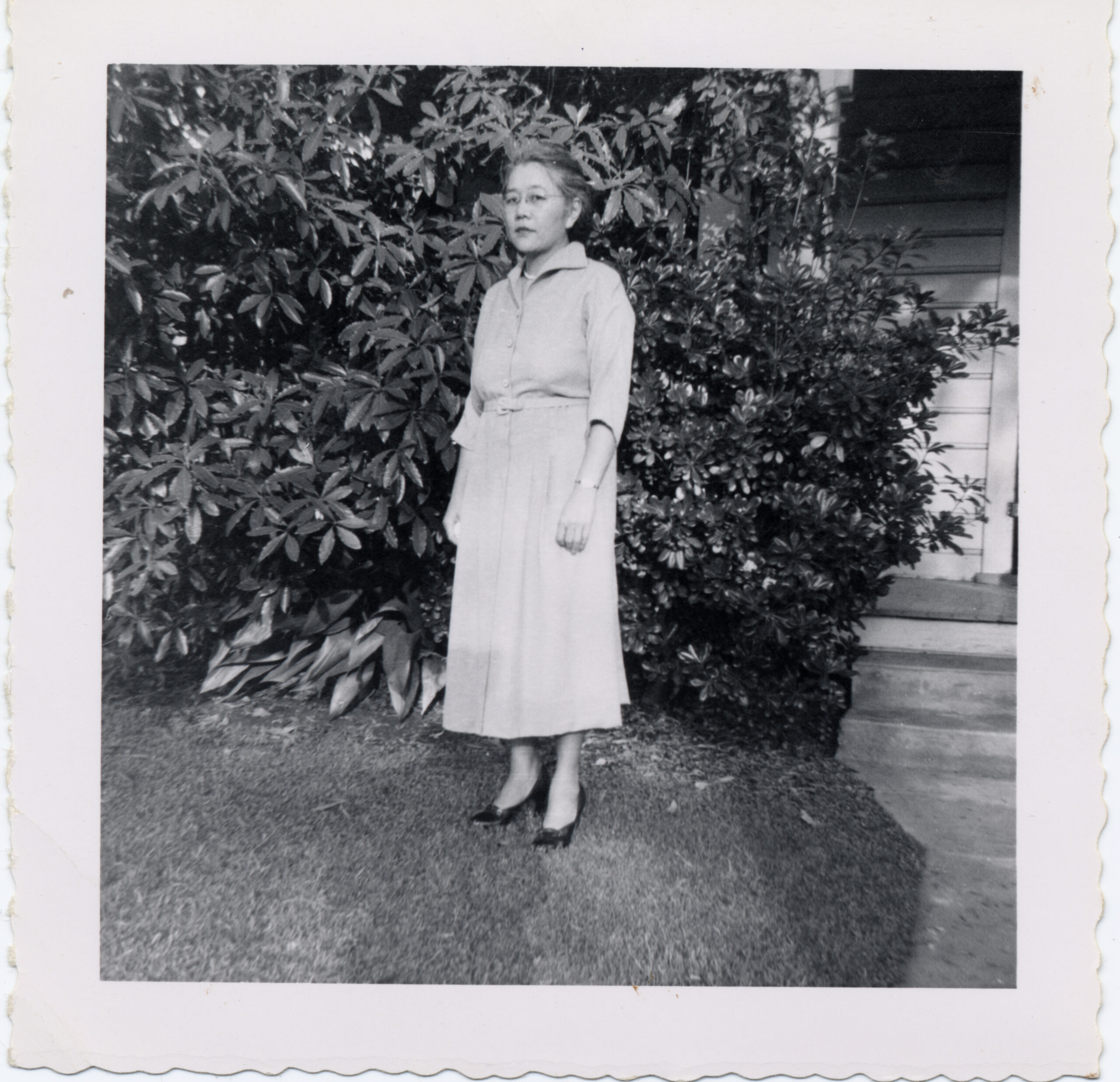
Sumi Harada returned to the house on Lemon Street in 1945. Upon her return, she utilized the home as a boarding house, helping displaced Japanese Americans returning from the concentration camps. To make additional space for the boarders, Sumi enclosed the upstairs sleeping porch. Notes in the downstairs bathroom instructing boarders where to leave their towels remain in the house today.
GUARDIAN OF THE LEGACY
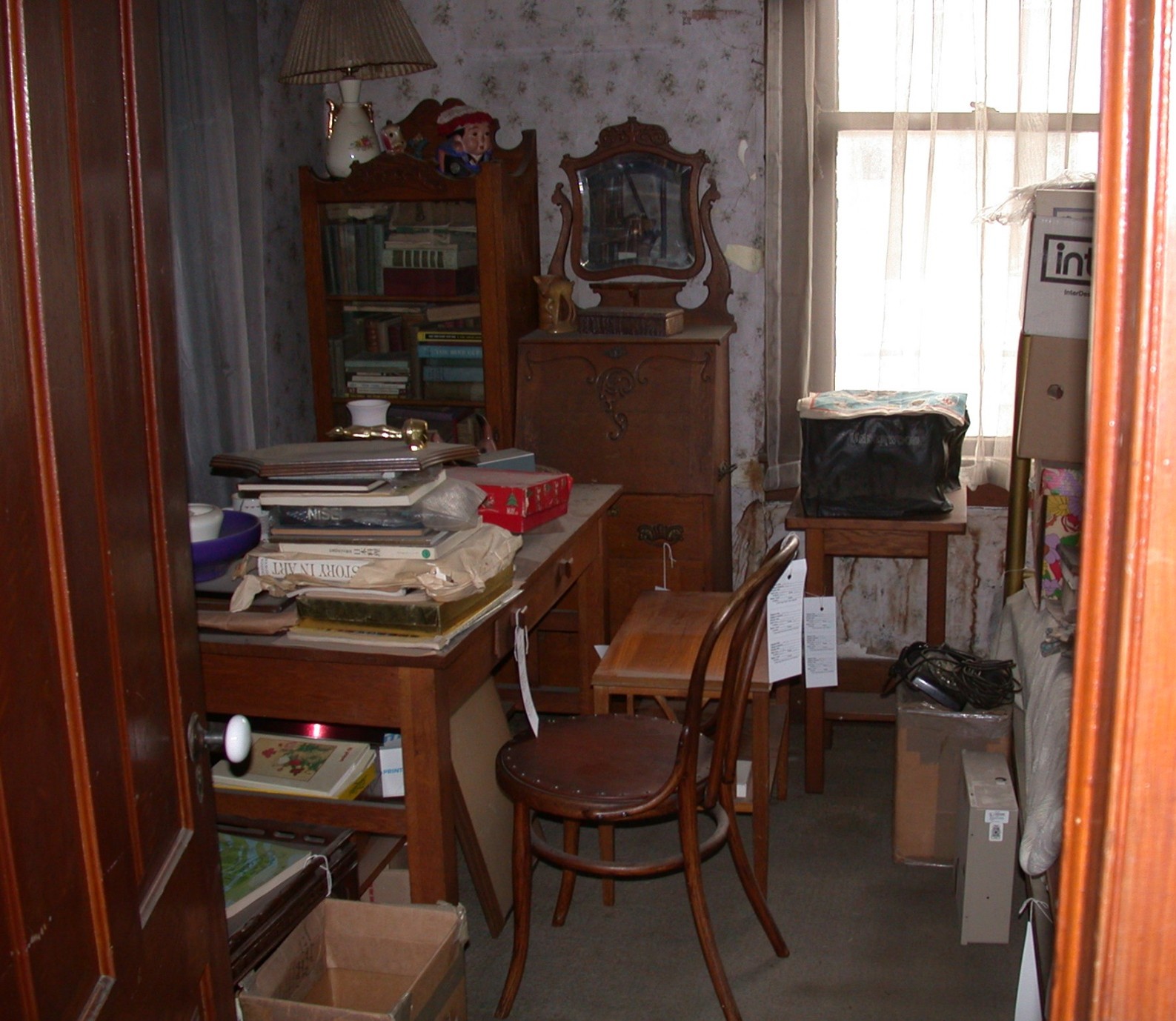
Sumi continued to safeguard the house on Lemon Street and her family’s story, leaving the home largely unchanged over the decades and maintaining a vast family collection of historical documents, photographs, and objects. She lived in the home until shortly before her death in 2000.
PRESENT CONDITION
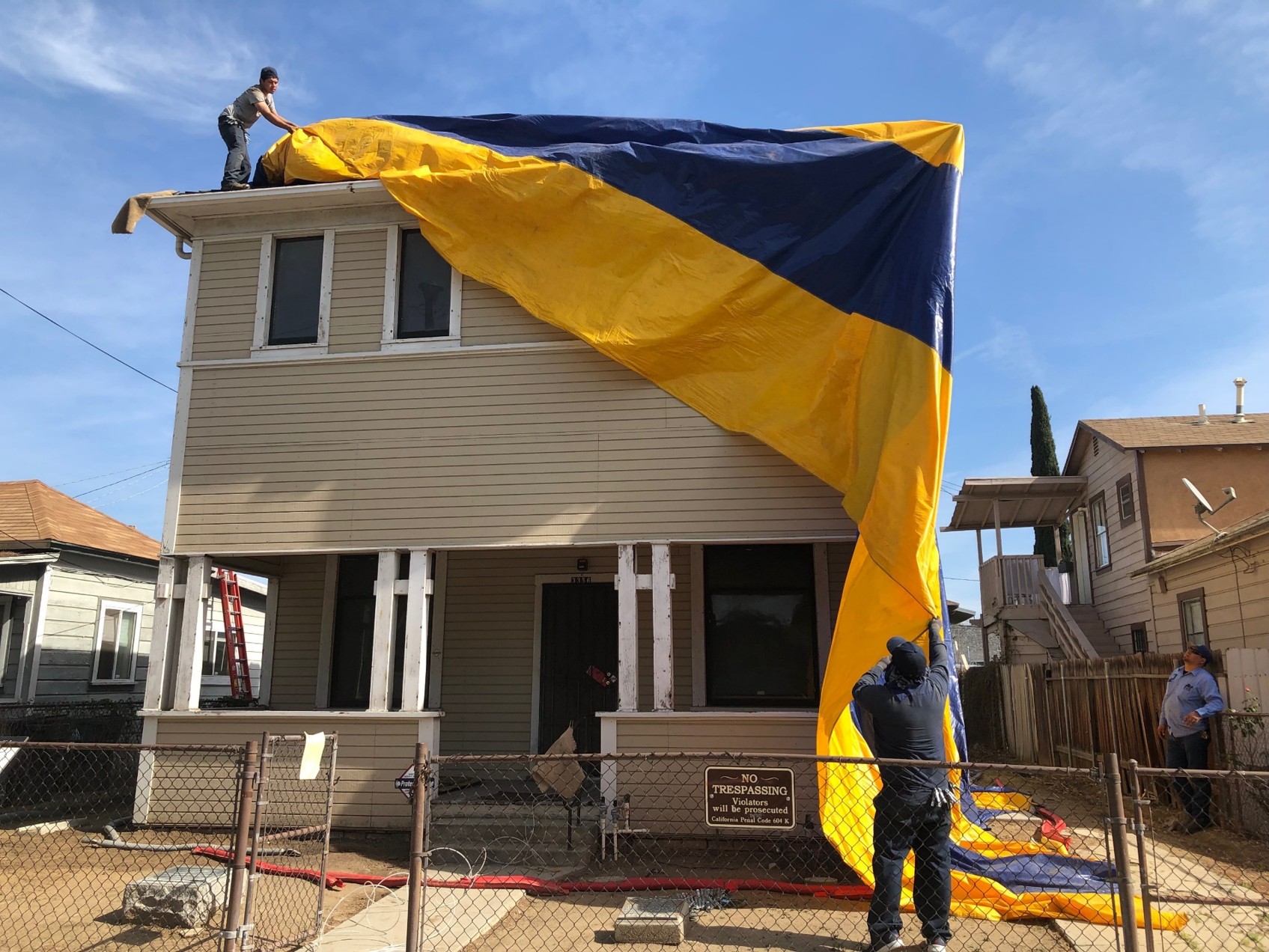
The vast majority of the historic finishes and fixtures from the 1916 renovation remain today. Under the stewardship of the Museum of Riverside, the house contents were documented, packed, and removed to offsite collections storage. To stabilize the house in anticipation of full-scale rehabilitation as a historic house museum, the house has undergone interior and exterior bracing, shoring of foundations, roof repairs, emergency site drainage work, removal of landscaping, deconstruction of the failing garage, removal and storage of the original siding, conservation of the inscription, and other conservation and stabilization efforts. The house next door, historically known as the Robinson House, is also under the stewardship of the Museum of Riverside, with plans for the site to become the Harada House Interpretive Center. The Harada House Foundation is actively fundraising for the Harada House and Interpretive Center projects.
ORIGINAL ARCHITECTURE
The Harada House on Lemon Street was originally built in the late 1870s to early 1880s, likely around 1884. The house was built as a single-story cottage with a four-room plan. One of seven original homes on the block bounded by Third and Fourth Streets, the house was bordered by orange groves on the back half of the block. Original Victorian Eastlake-style features and hardware, including door hinges, remain on the ground floor.
HARADA FAMILY PURCHASE
In December of 1915, Jukichi Harada negotiated the purchase of the Lemon Street home. Although the owners, Fulton and Hannah Gunnerson, were originally unwilling to sell the house to a Japanese American family, they eventually agreed to a sales price of $1,500. The family’s new Lemon Street neighbors subsequently offered $1,900 to the Harada family to purchase the house, hoping to keep the Japanese American family from moving into their white neighborhood. Jukichi Harada famously refused to sell, saying “I won’t sell. You can murder me, you can throw me into the sea, and I won’t sell.”
RENOVATIONS
Despite public uproar over the family’s purchase of the house, Jukichi Harada hired the Harp Brothers to renovate the family’s new home. The 1916 renovations expanded the house to approximately 1800 square feet with the addition of a second floor (with four bedrooms, a bathroom, and an open front sleeping porch). Upstairs finishes included oak floors, electric lights and switches, and brass hardware. The renovations also extended the front porch and added the staircase between the first and second floors. Craftsman-style details were added, including box columns and decorative ties on the front porch. Nearly all the historic wallpaper, fixtures, and hardware from this period remain.
WORLD WAR II: FORCED REMOVAL & INCARCERATION
Along with 120,000 other Japanese Americans, the Harada family was forcibly removed and incarcerated in US concentration camps during World War II. One of the iconic features of the Harada House is the pencil inscription written by Harold Shigetaka “Shig” Harada on the plaster wall of his upstairs bedroom, “Evacuated on May 23, 1942 Sat 7 AM Shig.”
JESS STEBLER
Unlike many Japanese American families, the Harada family was fortunate to retain ownership of their Lemon Street home during WWII thanks to the dedication of Jess Stebler. A close friend of the family and daily customer at their restaurant, Jess Stebler moved into the family home and acted as its caretaker, ensuring bills were paid and the house would remain safe. He regularly wrote Sumi, sent care packages to the concentration camps, and once even drove to visit the Haradas in the concentration camp to deliver fresh donuts. Jess Stebler’s letters describe the house landscaping at the time, including a peach tree, morning glories, roses, and apricots.
SUMI'S RETURN
Sumi Harada returned to the house on Lemon Street in 1945. Upon her return, she utilized the home as a boarding house, helping displaced Japanese Americans returning from the concentration camps. To make additional space for the boarders, Sumi enclosed the upstairs sleeping porch. Notes in the downstairs bathroom instructing boarders where to leave their towels remain in the house today.
GUARDIAN OF THE LEGACY
Sumi continued to safeguard the house on Lemon Street and her family’s story, leaving the home largely unchanged over the decades and maintaining a vast family collection of historical documents, photographs, and objects. She lived in the home until shortly before her death in 2000.
PRESENT CONDITION
The vast majority of the historic finishes and fixtures from the 1916 renovation remain today. Under the stewardship of the Museum of Riverside, the house contents were documented, packed, and removed to offsite collections storage. To stabilize the house in anticipation of full-scale rehabilitation as a historic house museum, the house has undergone interior and exterior bracing, shoring of foundations, roof repairs, emergency site drainage work, removal of landscaping, deconstruction of the failing garage, removal and storage of the original siding, conservation of the inscription, and other conservation and stabilization efforts. The house next door, historically known as the Robinson House, is also under the stewardship of the Museum of Riverside, with plans for the site to become the Harada House Interpretive Center. The Harada House Foundation is actively fundraising for the Harada House and Interpretive Center projects.
HARADA HOUSE TIMELINE
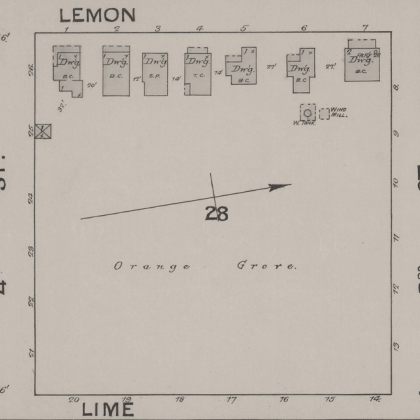
The house on Lemon Street is built circa 1884.
Photo: 1887 Sanborn Fire Insurance Map showing the cottage on Lemon Street. Image courtesy of the Museum of Riverside, Riverside, California.
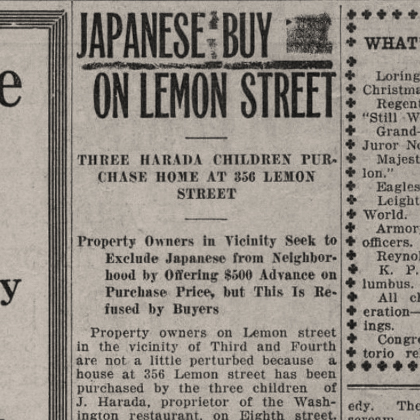
Purchase of the house on Lemon Street.
Photo: December 23, 1915 Riverside Daily Press article covering the Haradas’ purchase of their home on Lemon Street. Image courtesy of the Museum of Riverside, Riverside, California.
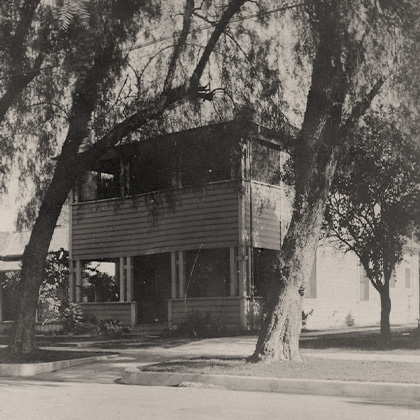
Haradas hire Harp Brothers to renovate the home, adding a second floor.
Photo: The Harada House, circa 1932. Image courtesy of the Museum of Riverside, Riverside, California.
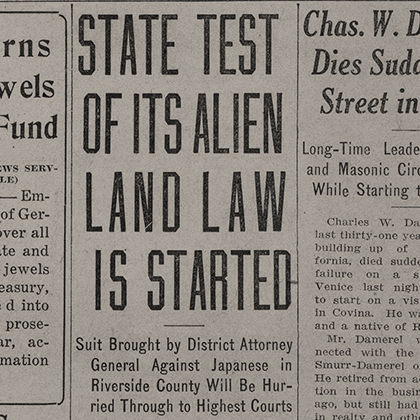
Superior Court Case.
Photo: October 6, 1916 headline in the Los Angeles Examiner reporting the start of the Haradas’ court case. Image courtesy of the Museum of Riverside, Riverside, California.
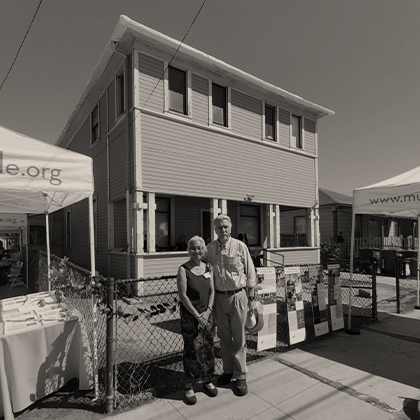
Judge Hugh Craig rules in favor of the Haradas, allowing them to keep their home.
Photo: Craig Swan, grandchild of Superior Court Judge Hugh Craig, and Naomi Harada, grandchild of Jukichi and Ken Harada in 2022. Image courtesy of the Harada Family.
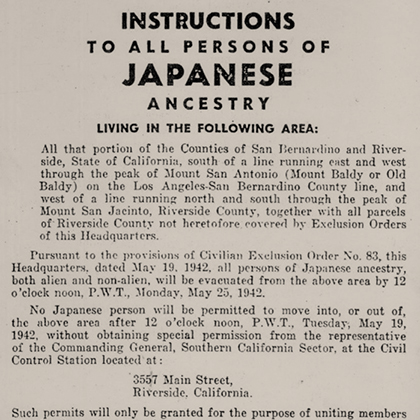
President Franklin D. Roosevelt signs Executive Order 9066. The order initiates the forced removal and incarceration of approximately 120,000 Japanese Americans.
Photo: Instructions for the forced removal of Japanese Americans in Riverside, California, May 1942. Image courtesy of the Museum of Riverside, Riverside, California.
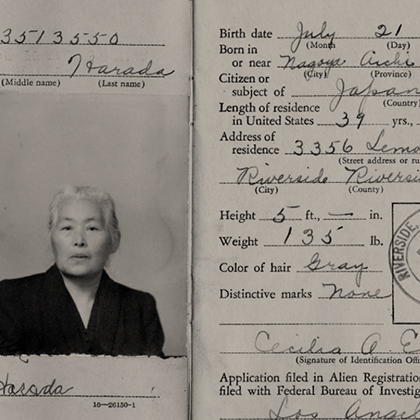
FBI raids and ransacks the house. Harold drives his parents Jukichi and Ken to their eldest son’s home in Sacramento.
Photo: World War II Alien Registration for Ken Harada. Image courtesy of the Museum of Riverside, Riverside, California.
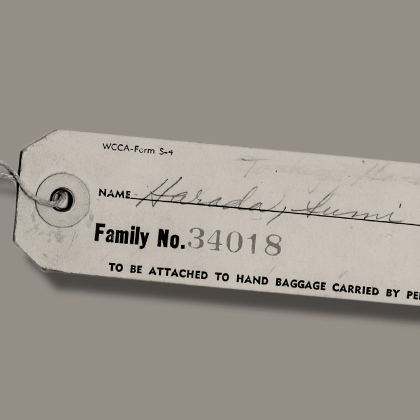
Daughter Sumi and son Harold are forcibly removed from the home and are sent to the Poston, Arizona, concentration camp. Harold writes in pencil on his bedroom wall, “Evacuated on May 23, 1942 Sat 7 AM.”
Photo: Sumi Harada’s luggage tag from her forced removal to a US concentration camp. Image courtesy of the Museum of Riverside, Riverside, California.
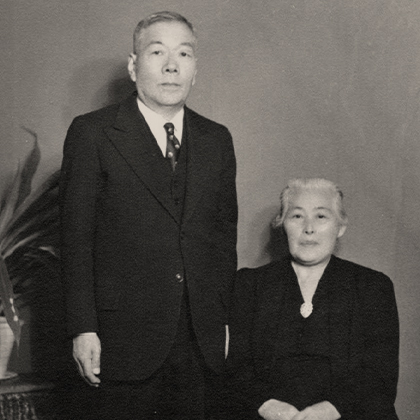
Jukichi and Ken are forcibly removed to Tule Lake and then to the Topaz, Utah, concentration camp. Jukichi and Ken later die in the camp hospital.
Photo: Jukichi and Ken Harada, circa 1940. Image courtesy of the Museum of Riverside, Riverside, California.
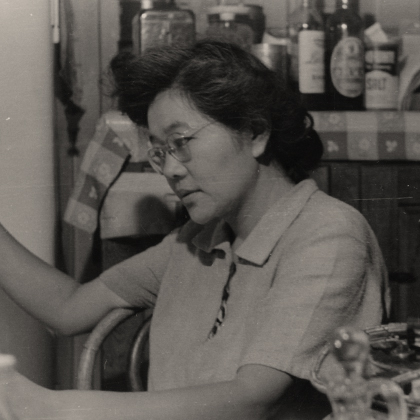
Daughter Sumi returns home to Lemon Street. Sumi uses the home as a boarding house for displaced Japanese Americans returning from the concentration camps. To add additional space for boarders, Sumi encloses the upstairs sleeping porch.
Photo: Sumi in the Harada House kitchen, circa 1945. Image courtesy of the Museum of Riverside, Riverside, California.
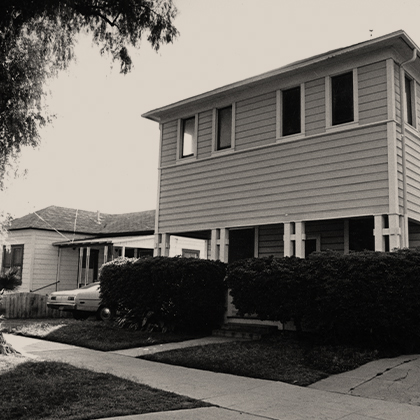
Graduate student Mark Rawitsch meets and interviews Sumi Harada in 1976 and begins working with Sumi to nominate the house as a local historical landmark. Their work leads to Harada House’s listing in the National Register of Historic Places in 1977.
Photo: The Harada House, circa 1965. Image courtesy of the Museum of Riverside, Riverside, California.
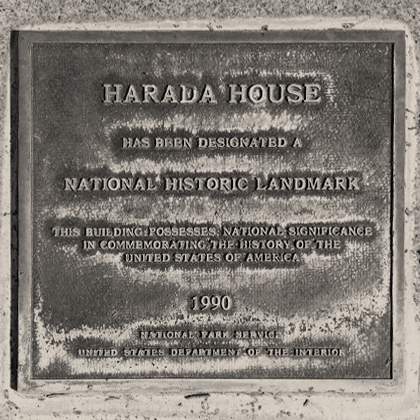
House becomes a National Historic Landmark.
Photo: The Harada House National Historic Landmark plaque, 1990. Image courtesy of the Museum of Riverside, Riverside, California.
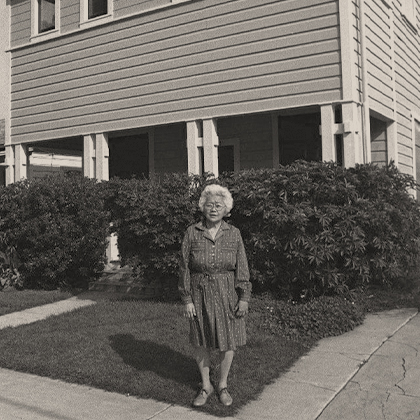
Sumi dies. Her brother Harold begins work to donate the home to Riverside.
Photo: Sumi Harada in front of the Harada House, 1983. Image courtesy of the Museum of Riverside, Riverside, California.
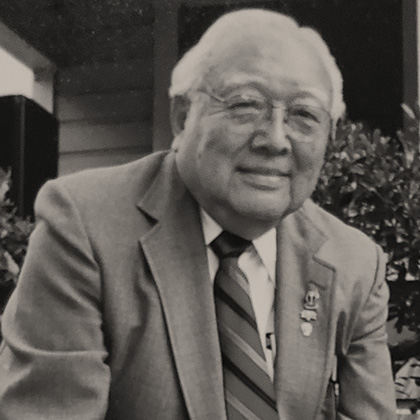
Harold dies and his children sign the deed for the house over to the City of Riverside.
Photo: Harold Harada at the Harada House, circa 1991. Image courtesy of the Harada Family.
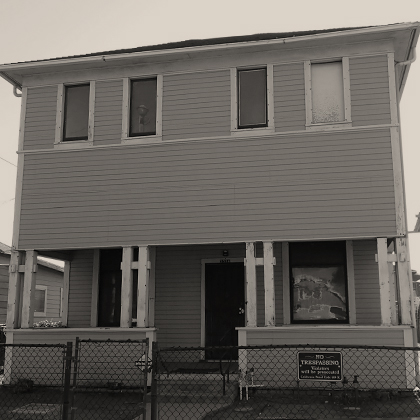
The Museum of Riverside becomes the steward of the Harada House.
Photo: The Harada House, circa 2021. Image courtesy of the Museum of Riverside, Riverside, California.
THE HARADA HOUSE IS CURRENTLY CLOSED FOR REHABILITATION
3356 Lemon Street, Riverside CA 92501 | info@haradahousefoundation.org
THE HARADA HOUSE IS CURRENTLY CLOSED FOR REHABILITATION
3356 Lemon Street
Riverside CA 92501
info@haradahousefoundation.org

©2026 Harada House Foundation, a 501(c)(3) Public Charity. Mailing address: Harada House Foundation, P.O. Box 2272, Riverside, CA 92516
©2026 Harada House Foundation,
a 501(c)(3) Public Charity.
Mailing address: Harada House Foundation,
P.O. Box 2272, Riverside, CA 92516